However, if symptoms persist, physicians usually recommend some of the treatments explained below.
Atopic Dermatitis Eczema Treatments
Medicines
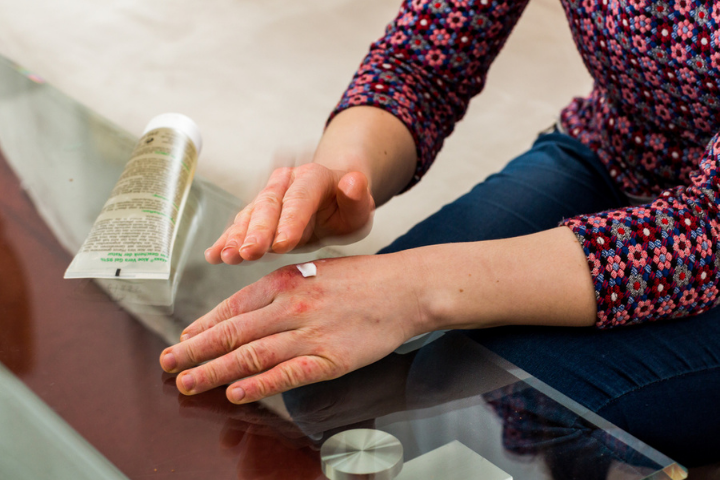
Ointments that reduce itching and restore the skin’s appearance: Your physician may prescribe you a corticosteroid topical treatment that is typically applied after showering. However, these therapies are not for long-term use as they can cause adverse side effects. There are also topical therapies that contain calcineurin inhibitors, which target the immune system. These therapies are applied after using a moisturizer.
Infection-fighting medicines: In case of skin infections or fissures, e.g. a bacterial infection, your physician may recommend an antibiotic ointment. He or she can also recommend placing you on oral antibiotics.
Inflammation-reducing medicines: Patients with a severe case of atopic dermatitis may take an oral corticosteroid like prednisone. While highly effective, long-term use of these medications is not advised.
Newer medications for severe atopic dermatitis: Another option for patients with severe atopic dermatitis belongs to a newer class of medications known as biologics. The most common one for severe eczema is dupilumab, which is taken intravenously as injections.
Additional Therapies
Two other options to manage severe eczema are wet bandages and light therapy.
Applying wet bandages entails dabbing a topical ointment on the affected sites and then wrapping them with wet bandages. This method necessitates a bit of know-how, so you may either do this in a hospital or have your physician or a nurse teach you the proper technique.
Phototherapy is another option in which the affected parts of the skin are exposed to natural sunlight or artificial ultraviolet light in ongoing sessions. While highly effective, phototherapy can speed up the aging process. It also heightens one’s risk of skin cancer in the long run.
Featured Image: DepositPhotos/ thodonal